Perennials vs Annuals coloring your garden!


We are often asked about the difference between annuals and perennials, how they differ and how they are used in the landscape. It can be a bit confusing because both are colorful and come in all sizes and shapes. Here is how to tell the difference.


An annual is any herbaceous (non woody) plant that is not hardy in your area. It dies over the winter and needs to be replanted yearly or annually. For example, a Martha Washington geranium becomes shrub-like in California but only gets 18 inches high here, then dies with the first hard frost. Popular annuals include marigolds, petunias, alyssum, geraniums and zinnias. So why do people go through the trouble of replanting every year? To answer that, we should first learn what a perennial is.

A perennial is an herbaceous plant that comes back every year. 
Once planted, they grow through

A perennial is an herbaceous plant that comes back every year. Once planted, they grow through their first season, die back to the ground during the winter then reemerge in the spring for many years (sometimes decades) to come. Shasta daisies, peonies, salvia, delphinium, sedum and coral bells are just a few of hundreds of types of perennials. These plants sound wonderful, and they are, but there is a catch—most perennials only bloom for 6-8 weeks. Even those that re-bloom have a non-flowering period after they have had their first flush of blossoms.


So what is a color loving gardener to do? Enter the Mixed Border, which uses a combination of perennials and annuals for a succession of flowers from early spring through fall. By choosing perennials with varied heights, colors and bloom times and using them as the “backbone” or framework of your bed or border, you can then simply fill in the gaps with annuals which generally bloom continuously from planting time right up to the first frost. New varieties such as the plethora of hybrid premium petunias stay covered with flowers with no deadheading necessary. With annuals available in every color of the rainbow, the look of a border can be changed from year to year without the need for a major revamp.
Now that you know your perennials from your annuals, you can design a border that will dazzle with color and texture. If you would like some guidance, don’t hesitate to ask, we are here to help! 

  Follow Us in Facebook:
Zion Landscaping & Masonry 
Call for FREE Estimates
    631 423 8082


The Beneficts of Power Raking

Power raking is the process of cutting swathes into the dead material of lawns to remove dead grass so the soil can breathe and the grass can grow more efficiently. Power raking differs from dethatching in extent. While dethatching tears deeply into the soil, removing both dead layers and healthy root systems, power raking is a gentle process design to tear out only the grass material at the surface of the soil.


A power raker is a specific type of machine equipped with roto-tiller-like blades that are intended to be used on lawns. It is about the size of a lawnmower, often larger, and many homeowners rent them from local landscaping services. The blades are set to turn just on the surface of the lawn, so that they dig into the grass bed and dead material covering the soil without actually digging it up. Power rakers produce a layer of detritus and a normal raking is often done afterwards.

Raking should groom, not damage, your spring lawn as it wakes.
Raking the lawn each spring is one of those tasks done by habit by homeowners. Before the days of mulching mowers and leaf blowers, raking was one way to keep thatch at bay and remove winter’s debris, but nowadays, machines have replaced muscle power in many lawn-grooming tasks. Spring raking can still be helpful in maintaining a neat lawn -- if you know how to use your rake to best effect.

Power raking removes the buildup of thatch under a lawn.
Power raking removes thatch, a tight mat of dead rhizomes, stems and roots, which builds up under the surface of a lawn. Some thatch is beneficial to lawns, but too much blocks water, air and nutrients from reaching the soil. If thatch gets thicker than 1/2 inch deep, the roots grow in the thatch instead of the soil.


Preparing your lawn, the Spring is the best season to do it.
                Contact us for a FREE Estimate:

     phone: 631-423-8082

Preparing your plants for Spring!


Finally!!
Our spring weather is here to stay and now we can plant those flowers and vegetables without worrying about another freeze.
Plant out daffodils, lilies, crocus, hyacinth and any other bulbs
Early spring is the time to set out bulbs which were forced in pots or bowls in the house. Some may bloom next spring, others may take two or three years to rebuild enough food reserve to support flowering.

Time for Plant your Perennials: 
The springtime is the best season for plant some perennials flowers in your garden. All the conditions that perennials relish and respond to are in place: warming soil, warm sunshine, longer days, moist ground, and regular rainfall. Roots quest into the ground, taking up water and nutrients to fuel growth, and top growth — foliage, stems, and flowers — surges forth.


Healthy soil for healthy         vegetables:
Container gardening is also the easy way to start growing your favorites vegetables on windowsills, balconies, decks even if you dont'n have  an outside garden plot.

Instead of using chemicals based soil and fertilizers, go for natural composts like dried leaves and flowers. Always keep the soil healthy for gardening vegetables in the spring season. Begin composting from late fall to build up proper soil. When the soil becomes moist, dig the compost and add well-rooted manure before you plant the spring vegetables.

Enjoy your Spring season!!

Consulting your FREE Estimate:
           631-423-8082

Preparing your Lawn for Spring!

Finally, the spring is almost around the corner! Gardeners and lawn enthusiasts will be preparing their gardening tools, mulch, plants, and other tools for the new growing season as soon as winter steps out of the way.
Remove Fall and Winter Debris – Rake away the debris from the fall and winter months, including leaves, sticks, and stones. Doing this will help give your lawn a fresh new start for spring! Raking in itself has the additional benefit of loosening the surface of your lawn’s soil, which encourages healthy airflow.
Keep It Short – Once the growing season has begun, go ahead and cut your grass short and collect the clippings. Detatch the lawn if you don’t do it in the fall – use a garden rake or thatching rake to dispose of any dead vegetation.
Use More Grass Seed – Are there any areas in your lawn that look dead, balding, or weak? Use a strong rake to open the surface of your lawn and mix in some grass seed with the new, healthier soil. Spread this soil and grass seed mixture over the surface, water regularly, and get ready to enjoy a fuller, healthier lawn!
Start Mulching – Want to protect your plants while making your lawn look fantastic? Grab some mulch! The protective covering will help lock in moisture in the soil beneath it and will help keep your plants and shrubs happy and protected. For better results, place mulch 2 to 4 inches deep around the base of your trees, shrubs, and in your flowerbeds.

Water Your Lawn Deeply – Do you water your lawn frequently but with little water? You could be doing your lawn a disservice! Instead of doing it frequently with less water, do it when your lawn needs it and with a lot of water, like a good rainstorm. This will help you train the grass roots to dig deeper into the soil, which helps it become richer and better hydrated.

Want a fantastic lawn this year but don’t have time to put in all the effort?
 Zion Landscaping & Masonry will be there to make sure your lawn is glorious and perfect all year round! 
Call us at 631-423-8082 or visit us: Zion Landscaping & Masonry

Safety Guide for your Pets - Winter Hazard -

Safety Guide: Even though they may be indoors, you’re dogs still need to get outside.  With winter comes shorter days and darker nights.  For this reason, it is a good idea to get them (as well as yourself) some reflective wear whether it be a leash, collar, or coat to be more visible during nighttime walks.     
But what about that salt?  
For many pets, the salt can be irritating causing an almost burning like sensation.  If they happen to be more curious, eating the salt can also be toxic causing increased thirst, vomiting, and even convulsions or kidney damage in larger amounts.  There are pet safe forms for your driveway but a city won’t likely be using this on sidewalks & roadways.  Consider boots for your dogs or make sure that you wipe their feet before coming in the house.
 As a last reminder, for all those stray cats outdoors looking for a warm place, don’t forget to knock on your car hood or check inside before you get a start on your day.  I hope that you all will have a safe and healthy winter season!  Stay warm!!


Reason to Compost

 6 Reasons to Compost:
Compost  is simply decomposed organic matter, but it’s the best gift you can give your garden. Here are just a few of the many benefits of compost.   Compost can be used to feed and condition the soil. It can be applied as a mulch, incorporated within planting holes or used as an ingredient in potting mixtures. 
1. Compost Protects from Drought: Compost encourages the formation of soil clusters that soak up water and hold it like a sponge.
2. Compost Improves Soil Aeration:  Adding compost to soil creates air pockets between soil clusters.
3. Compost Stops Erosion: Soil that contains lots of humus (compost) resists erosion from wind and water.
4. Compost Nourishes the Soil: 
Compost acts as a nutrient storehouse, gradually releasing nutrients to plants throughout the growing season.
5. Compost Prevents Disease: A thin layer of compost spread over the soil’s surface will fight plant diseases better than any chemical fungicide.
6. Compost Reduces Waste: Composting makes use of grass clippings, leaves, and kitchen scraps that otherwise would take up space in a landfill.
Follow us in Facebook: 

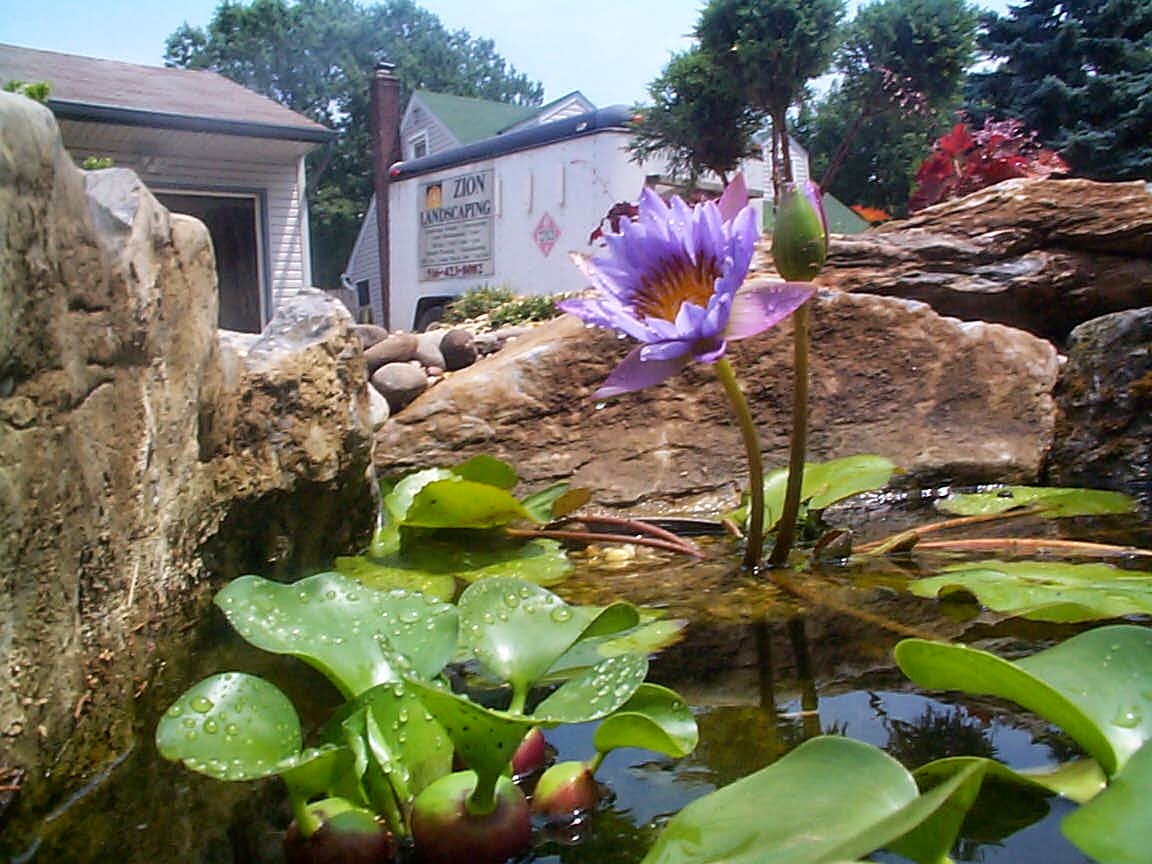
Ponds Seasonal Care

Fall and Winter Maintenance
In the fall, water is almost always very clear because of the cooler temperatures and the full, lush plants. Enjoy the good water quality

There may be an increasing numbers of yellow leaves this time of year, so prune them off all of your plants. Your lilies - tropical and hardy - should still be going strong until the first frost

Stop fertilizing when the weather becomes cooler. This lets the plants know the season is coming to an end
When the water temperature is around 55 F? (10? C), stop feeding your fish. Continuing to feed them could cause health problems or death for them, since their digestive systems are beginning to slow down for the winter.

As leaves falls from nearby trees, you'll probably have to empty the debris net every day to keep up with the influx of leaves. Some of them will undoubtedly sink to the bottom, try to remove as many as you can, however a few left in the pond will give insects and frogs a place to over winter.
If you leave too much organic matter in your pond, the water may turn brown. If this happens, remove the excess debris and add activated carbon to clear the water.


As it gets colder, your aquatic plants will have all but died for the season. Now you can cut back the dead plant material and remove the tropicals. Cut back the cattails above the water level, or better yet, leave them up to see how magnificent they look in the winter.
If you're fortunate enough to be where it stays warm all year round, you're set for the winter.
If you live up north, where the surface of the pond freezes, you'll need to prepare for winter by deciding whether you want to keep your pond running or shut it down.

To shut your pond down, first unplug your pump and pull it out of the water. The pump should be stored in a frost-free location, submerged in a bucket of water to keep the seals from drying.
If you have fish, a small re-circulating pump that bubbles at the water surface is necessary to oxygenate the water. In all but extremely low temperatures, the bubbling of the pump will also keep a hole open in the ice to allow for a gas exchange, keeping your fish alive. It is not necessary to oxygenate the water or keep a hole open in the ice if you don't have fish.

If your area experiences long periods of extremely cold weather, you may consider adding a floating de-icer. Controlled by a thermostat, the unit only runs when the water temperature is at or below freezing, heats the water to just above that, and then shuts off again. Ask your installer or local supplier for products to help your pond during the winter.
If you use a floating de-icer, place it away from the bubbler. The movement of the water can move the heated water away from the de-icer, making it run more than necessary.
The most important thing is to have fun with your water feature all year long. Keep some of these key maintenance issues in mind, and it will be smooth sailing. In the meantime, stay warm!

Follow us: 
Zion Landscaping & Masonry Inc
Call for FREE estimates
    631 423 8082